

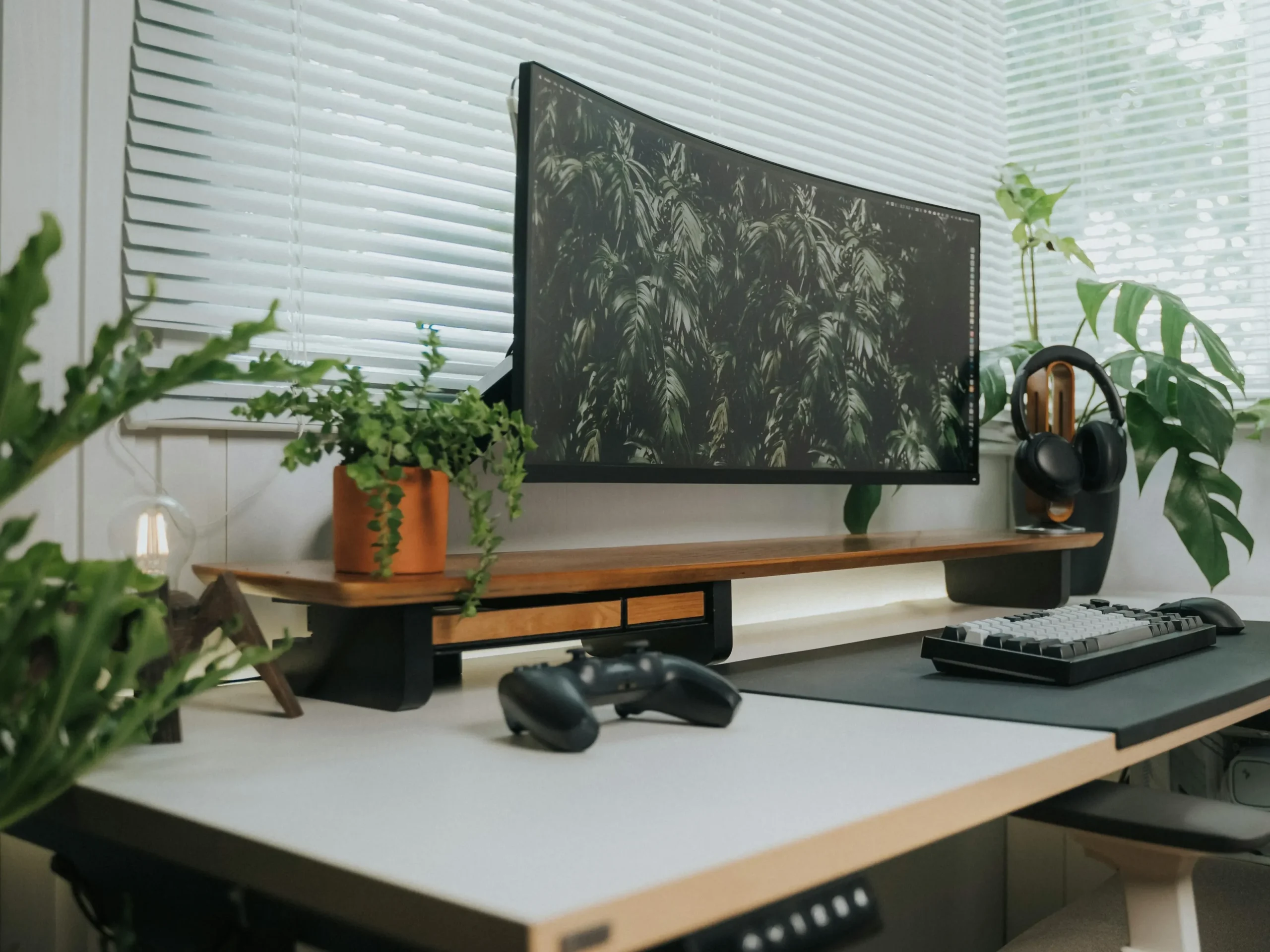
Human beings aren’t meant to spend eight to ten hours a day staring at cold plastic, stark aluminum, and harsh glass. Yet, the modern workstation has become exactly that—a sterile tech cage.
Enter biophilic design, a design philosophy centered around weaving the natural world back into our indoor environments. Integrating organic elements into your workspace isn’t just about making your desk look beautiful for a social media snapshot; it is scientifically proven to lower cortisol levels, reduce eye fatigue, and dramatically restore cognitive focus.
If you want to escape the clinical gray tech slump, the secret lies in a step-by-step layering process. Here is the blueprint for building a high-performance, plant-infused desk setup from the ground up.
Layer 1: The High-Contrast Foundation (The Ground Layer)
Before you introduce greenery, you must address the largest visual surface area of your workspace: your desktop. Biophilic design relies heavily on balancing clean, modern surfaces with deep, grounding textures.
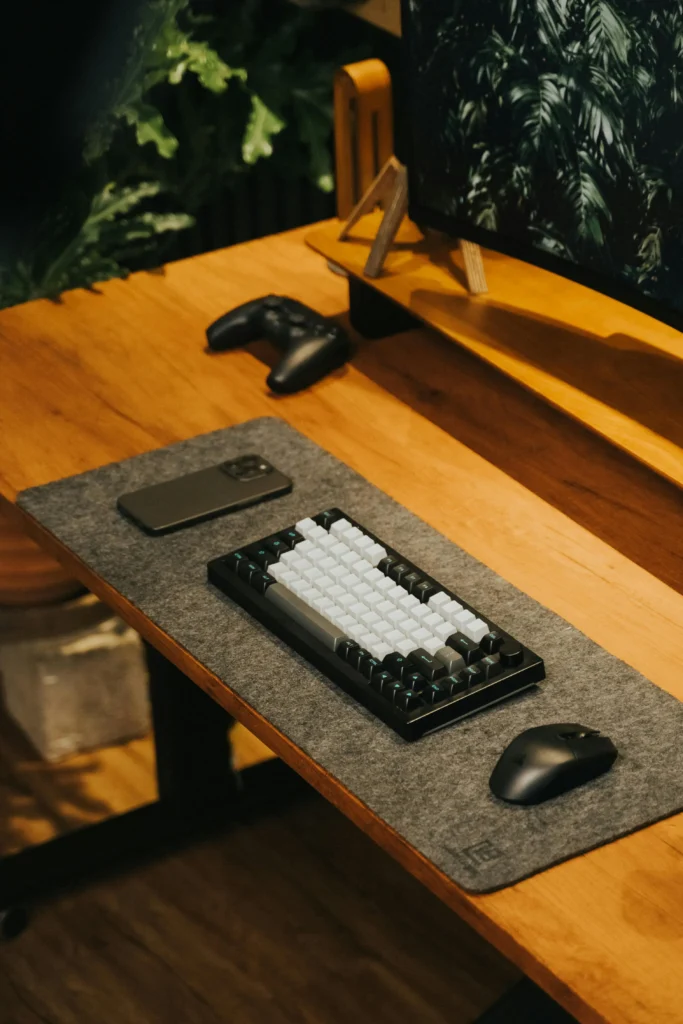
🌿 The Design Choice: The Sleek Charcoal Desk Mat
If you use a bright white or light-colored desk frame, a dark charcoal or black desk mat is essential. It acts as a visual anchor for your peripherals, framing your mechanical keyboard and mouse while protecting your tabletop surface.
- How to Style It: Place a large, dark mat directly in the center of a light-rimmed desk. The sharp contrast creates a clean, geometric frame that immediately makes the organic textures of wood and plants pop when placed around it.

Layer 2: Architectural Elevation (The Structural Layer)
The biggest mistake people make when adding plants to a workspace is cluttering the actual desk surface. If your table is crowded with small pots, your brain registers it as messy background noise, which completely defeats the calming purpose of nature.
To prevent this, you need to introduce vertical layers to create breathing room for your tech and your flora.

🌿 The Design Choice: The Dual-Tier Premium Wooden Desk Shelf
By raising your monitor onto a solid wood riser featuring integrated minimalist drawers, you instantly create a multi-level layout. This structural layer gives you a premium wooden backdrop for your keyboard while freeing up the surface estate underneath the shelf for low-profile storage.
- How to Style It: Use the top of the desk shelf to elevate your display and host a singular, vibrant plant pot. Keeping the shelf organized allows the natural wood grain to take center stage as the warm heart of your setup.
Layer 3: The Living Elements (The Greenery Layer)
Now that the structural framework is set, it is time to bring in live foliage. The key to a successful nature-inspired desk setup is selecting distinct plant shapes to frame your technology without blocking your screen.
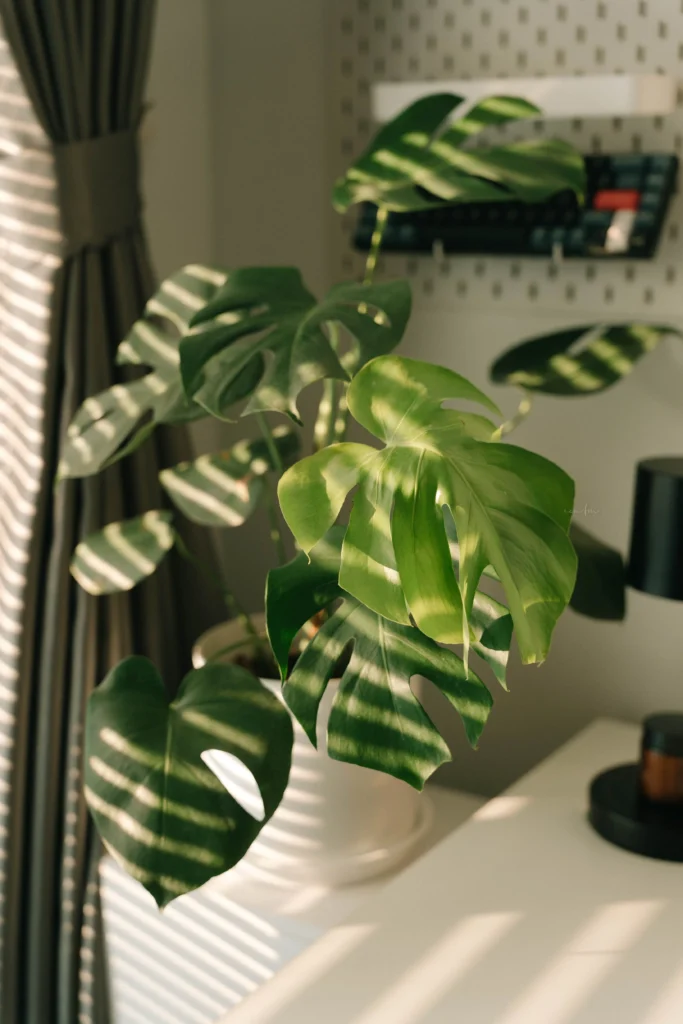
🌿 Two Perfect Setup Plants to Replicate This Look:
- The Monstera Deliciosa (Split-Leaf Philodendron): A staple of modern interior design. Placing a larger Monstera slightly behind your desk allows its iconic, wide-cut leaves to frame the corner of your room, softening the harsh square edges of your walls and monitor.
- The Trailing Ivy or String of Pearls: Perfect for shelf placement. Choose a small trailing plant and house it in a textured terracotta or warm orange ceramic pot. Placing it directly on your wooden desk shelf allows the green vines to cascade naturally over the edge, creating a beautiful organic waterfall effect next to your monitor.
💡 Styling Secret: The pop of orange or clay earthy tones from a terracotta pot breaks up the strict green-and-white color palette, adding an instant layer of designer warmth to the desk.
Layer 4: Diffused Light and Under-Shelf Glow (The Ambient Layer)
The final layer that brings a biophilic workspace to life is lighting. To simulate the calming feel of sunlight filtering through a forest canopy, you must avoid harsh overhead lights and embrace soft, indirect illumination.
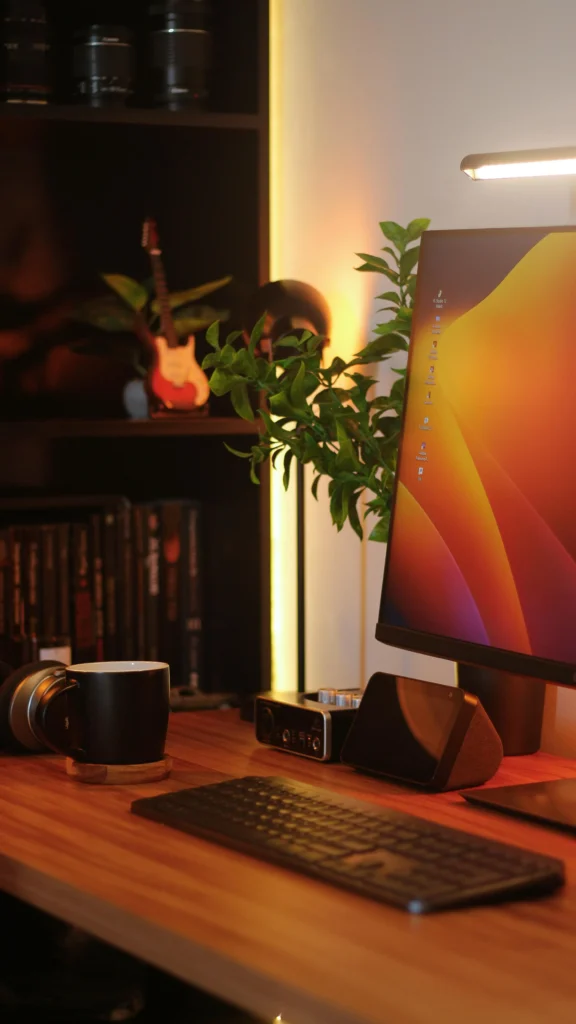
🌿 The Design Choice: The Under-Desk LED Ambient Strip
Instead of a bulky traditional desk lamp that takes up physical space, mount a slim, diffused LED light bar or strip directly underneath your wooden desk shelf. This projects a beautiful, low-profile glow downward across your desk mat.
- How to Style It: Pair your under-shelf lighting with adjustable window blinds. During the day, angle your blinds to let soft, sliced natural light stream into the room. At night, turn off the main lights and let the under-shelf ambient strip illuminate your workspace, keeping your mind completely calm and focused.
Bring the Outside In
Transforming your workspace with biophilic elements is more than a trendy interior design choice—it is a conscious investment in your daily mental well-being. By layering rich wood grains, contrasting desk mats, and lively green foliage, you turn a stressful workstation into a restorative sanctuary where your best ideas can naturally grow.
Are you leaning toward adding cascading trailing vines to your setup, or do you prefer the wide, architectural look of a Monstera plant? Let us know your favorite workspace greenery in the comments below!